A good building automation case study shows four things: the problem, in the owner's words; the system, by name; the result, as specific as the customer will say on the record; and who says so. Most controls companies stop at the system. The buyer needs all four, because most buyers have picked a favorite before they ever call you.
Your best work is above a ceiling tile. Owners, engineers and facility managers never see it. A case study is how they do.
If you sell for a building automation company or an ALC dealer, you already know the jobs worth bragging about. The question is whether anyone outside the building can see them, and whether what they see answers the questions an owner is actually asking.
Here's what buyers do before they call, the four parts a good case study needs, and one film that has all four.
What buyers do before they call you
These numbers come from two big B2B buyer surveys. Neither one is about building automation alone. Both describe the people who sign for your projects.
| What buyers do | Share | Source |
|---|---|---|
| Prefer a buying experience with no sales rep at all | 61% | Gartner, survey of 632 B2B buyers, Aug–Sep 2024 |
| Actively avoid suppliers who send irrelevant outreach | 73% | Gartner, same survey |
| Say the supplier's website and its sellers told them different things | 69% | Gartner, same survey |
| Ranked a preferred vendor before first contact | 94% | 6sense, more than 4,000 buyers, 2025 |
| Bought from that preferred vendor | 77% | 6sense, same study |
| How far into the journey buyers first contact a seller | 61% (69% in 2024) | 6sense 2025 Buyer Experience Report |
Sources: Gartner press release, June 25, 2025 (survey of 632 B2B buyers, August through September 2024). 6sense press release, November 12, 2025, and the 6sense 2025 B2B Buyer Experience Report (more than 4,000 buyers in North America, EMEA and APAC). Both surveys cover B2B buying in general, not building automation alone. Data checked: November 3, 2026.
Read the table top to bottom and it tells one story.
Buyers do the homework without you. Most would rather not talk to a rep at all. When they finally call, they're about 61% of the way through, and nearly all of them already have a favorite.
The favorite usually wins. 6sense found buyers bought from their preferred vendor 77% of the time. The case study has to do its job before the first call, not after it.
Your website and your rep have to tell the same story. 69% of buyers in Gartner's survey said they didn't. A case study fixes that. The rep sends the same film the buyer found on your site.
Marketers already know this. In Demand Gen Report's 2025 Demand Generation Benchmark Survey (July 8, 2025), 57% of the marketing leaders surveyed chose case studies as their top content format. The format isn't the problem. What goes in it is.
The four things a good one shows
Gartner lists six jobs a B2B buyer works through. Two of them are where a case study earns its keep. In Gartner's words: validation, "We think we know the right answer, but we need to be sure," and consensus creation, "We need to get everyone on board."
A building automation buyer is rarely one person. It's an owner, a facility manager, an engineer, sometimes a finance lead. Each one is checking something different. A good case study answers all of them in one place.
- The problem, in the owner's words. Not "we upgraded the BAS." What was at stake. Comfort complaints, an unsupported legacy system, an energy target, a space that has to hold tight conditions.
- The system, named. WebCTRL, i-Vu, whatever it is. And the hard part: the mix of old and new equipment it had to tie together. Engineers want to see that you've handled their kind of mess before.
- The result, as specific as the customer will say on the record. If the customer will give a number, use it. If they won't, use what they will say plainly. Never add a number they didn't give you.
- Who says so. A named customer, on camera, in their own words. Not your sales copy. A facility manager saying it beats anything you can write about yourself.
One film that shows all four
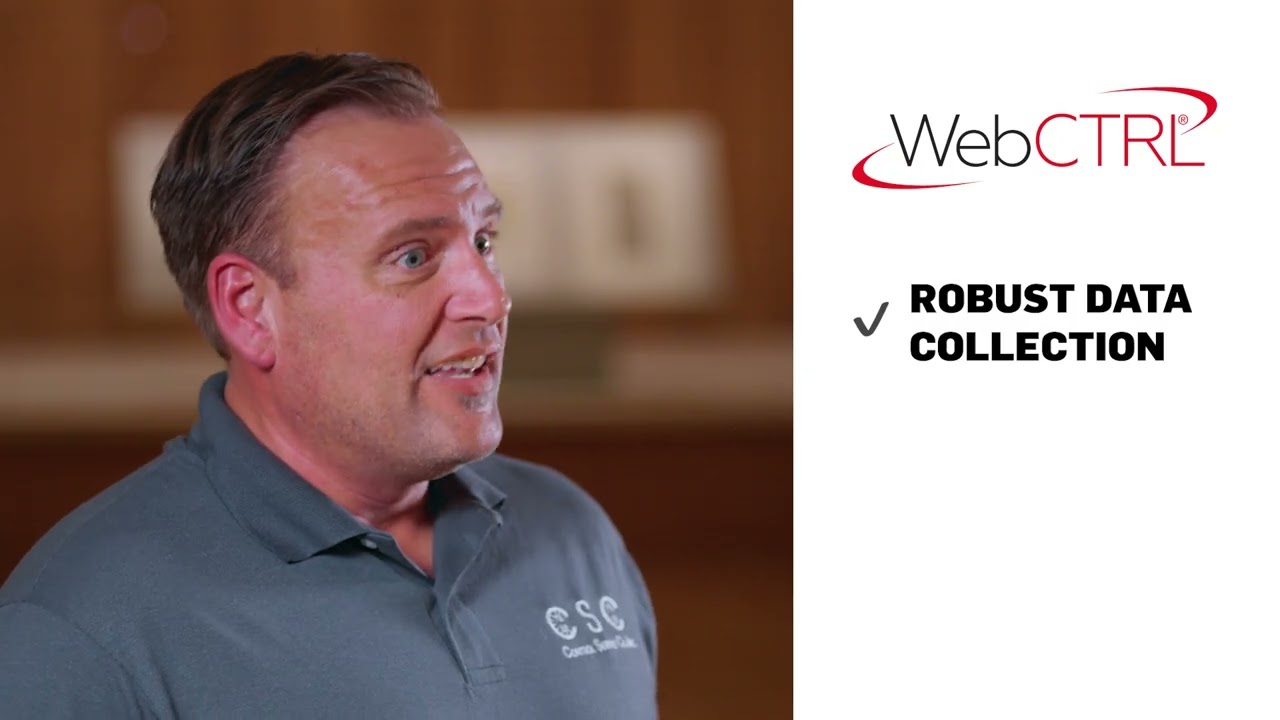
The Nelson-Atkins Museum of Art in Kansas City, Missouri, runs Automated Logic WebCTRL, supported by its controls partner of many years, Control Service Company. Here's how the four parts line up in the film we made for Automated Logic.
| What the buyer checks | What the film shows |
|---|---|
| The problem | A 400,000 square foot museum on 22 acres of sculpture park, almost a million visitors a year, and art that is "very, very sensitive to slight fluctuations in temperature and humidity." |
| The system | WebCTRL as one control backbone over equipment "from old contactors to pneumatic equipment to equipment that's brand new." |
| The result | Trend data that proves the museum holds the conditions lenders require. The museum says that is "instrumental" in acquiring special exhibitions and loan pieces. |
| Who says so | The museum's own staff: "I cannot imagine my staff getting through any day without WebCTRL." |
Source: the film's transcript on our Nelson-Atkins film page. Quotes are the museum's and CSC's own words in the film.
Notice what the result is. It isn't a savings figure. It's the thing the museum actually cares about: being able to borrow art. That's the result an owner of another museum, a lab or an archive will recognize as their own problem.
Here's the film. 3:31, on location, interviews and drone.
 Film03:31
The line most people remember is the museum's: "Like a good doctor, they see our facility clearly." Nobody in your marketing department could write that. A customer said it on camera.
What the weak ones get wrong
Weak case studies fail the same way. They're about the contractor, not the customer.
- A spec sheet with a logo. Points, controllers, panels. Engineers skim it. Owners close it. Nobody can tell what was at stake.
- No customer voice. A paragraph in your words about how happy the customer was. Buyers discount it, and they should.
- A result nobody will stand behind. "Significant savings" with no name attached. If the customer won't say it, don't print it.
- Hidden. A PDF three clicks deep, never posted, never sent. A case study nobody sees doesn't exist.
- Different everywhere. The website says one thing, the rep says another. That's the 69% in Gartner's survey.
How a good one gets made
Automated Logic runs its own case study program, and its process is a good model for any controls company. We filmed Library and Archives Canada in one day on location in Ottawa in June 2024. Automated Logic now names that film when it invites other customers into a video case study.
How it works:
- The customer is invited by Automated Logic and its dealer.
- Interviews run about 15 minutes each, with the people who use WebCTRL every day.
- The film covers what matters to the next buyer: sustainability, labor savings, occupant comfort, retrofit benefits, integration and best practices.
You don't need a manufacturer's program to work this way. Pick one project where the customer is happy and the stakes were real. Get the release signed first. Interview the people who run the building, not just the people who sold the job. Film the mechanical room, the front end and the building itself, so the viewer can see what was hard. (More on what a finished film does in the pipeline in what a customer case study video is worth in B2B sales.)
Then use it everywhere. Next to the service it proves on your website. On your LinkedIn. In every follow-up your sales team sends. A case study is only worth something when the buyer finds it before they've picked a favorite.
FAQ
What is a building automation case study?
It's the story of one real project, told so the next buyer can check it. The building and its problem, the system that was installed or upgraded, what changed, and the customer saying so in their own words. It can be a written page, a one-pager or a film. The film is the version a buying group actually passes around.
What should a building automation case study include?
Four things. The problem, in the owner's terms. The system, named, with the hard parts it had to tie together. The result, as specific as the customer will put on the record. And who says so, on camera or by name. If a piece is missing, the buyer fills the gap with doubt.
How long should a case study video be?
Long enough to show all four parts and no longer. The case study films on our case study video page run from 2:25 to 3:42. The Nelson-Atkins film runs 3:31.
Does the customer have to agree to a case study?
Yes. Get the release signed before anyone films, and publish nothing without the customer's permission. An owner who agreed up front is also the owner who gives you the good quotes.
Where should a building automation case study go once it's made?
Everywhere a buyer checks before calling you. Your website, next to the service it proves. Your LinkedIn. Your sales team's follow-up e-mails. In Gartner's 2024 survey, 69% of B2B buyers said what the website told them didn't match what the seller told them. One case study, used everywhere, keeps the story the same.
Next step
Not sure your best projects are visible at all? Our free 13-step marketing scan checks your website, LinkedIn, search visibility and content, and tells you where your proof is missing. Ready to film one? See how a case study film works. ALC dealer? Case study films are on the dealer hub, and the scan's fixes are MDF-eligible.